
Read Time: 4 Minutes
Key Takeaways:
- Elevated pressure creates constant friction that gradually weakens the inner lining of your arteries.
- This continuous physical force makes it easier for cholesterol to stick to vessel walls and form hard plaque.
- A compromised circulatory system significantly increases the risk of developing peripheral artery disease and aneurysms.
- Regular vascular check-ups can map your blood flow and detect early changes before they limit your lifestyle.
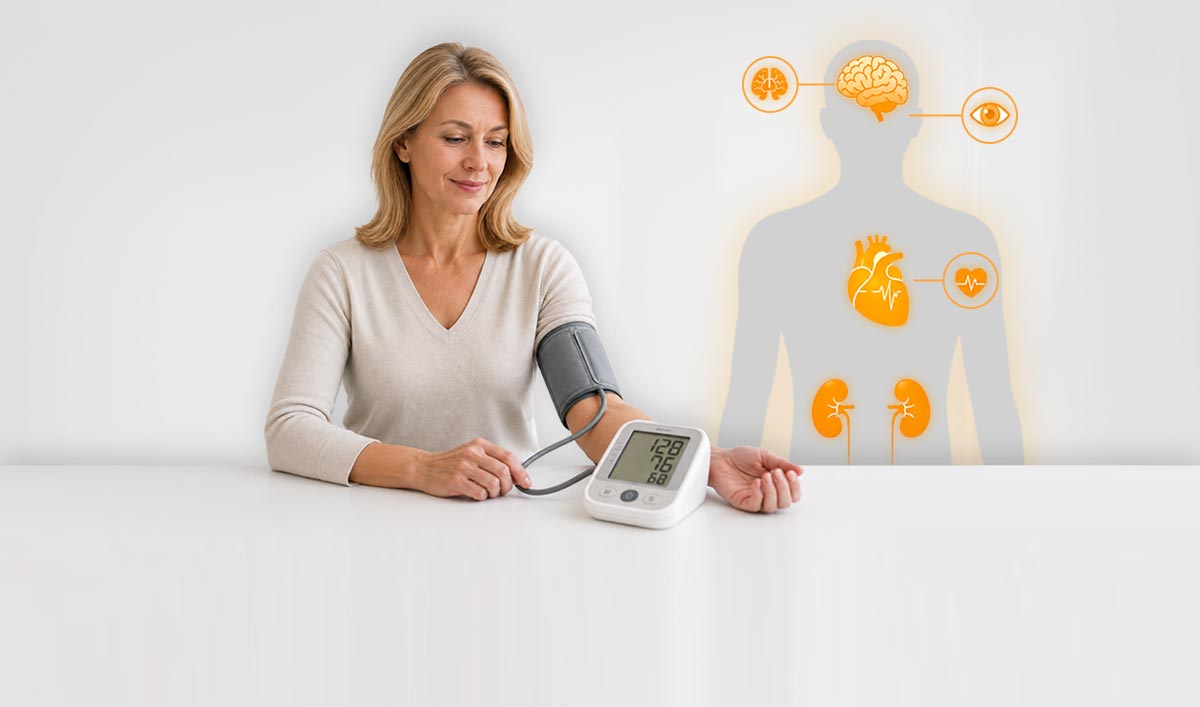
Have you ever noticed that when people talk about high blood pressure, they almost exclusively mention the heart? It makes perfect sense, but it leaves out a massive part of the picture. Hypertension is a full-body condition. Those elevated numbers on the monitor mean that the intricate network of blood vessels keeping your limbs and organs active is under constant physical stress.
When you ignore this silent shift in your circulation, you aren’t just making your heart work harder. You are gradually altering your long-term mobility and overall vascular health without even realizing it.
How elevated pressure changes your vessels
Your circulatory system is incredibly resilient, designed to handle natural fluctuations when you exercise or rest. However, chronic hypertension acts like a garden hose carrying water at a volume and speed much higher than it was built for. Over time, this constant flow creates a very predictable cycle inside your body:
- Micro-tears in the lining: The continuous force creates tiny, microscopic areas of friction on the smooth inner walls of your arteries.
- Plaque buildup: According to the Mayo Clinic, “High blood pressure can damage the cells of your arteries’ inner lining.” When this happens, dietary fats and cholesterol easily get trapped in these compromised areas, forming hard plaque.
- Vascular stiffness: As this plaque accumulates, your arteries lose their natural flexibility, forcing your circulatory system to push even harder to deliver oxygen to your extremities.
The domino effect on your health
When your arteries narrow and lose elasticity, it changes how fluid and blood move through your limbs. This constant strain is a major catalyst for multiple conditions that can eventually limit your independence:
- Peripheral Artery Disease (PAD): As pathways to the legs become obstructed by plaque, your muscles are deprived of adequate oxygen. This causes a heavy, cramping sensation when you walk. The National Heart, Lung, and Blood Institute explains that “Over time, high blood pressure can damage your arteries, decreasing the flow of blood and oxygen to your heart and other organs.”
- Vascular Aneurysms: The constant pressure can cause a section of a weakened arterial wall to thin out and bulge, which requires careful monitoring to prevent serious medical emergencies.
- Chronic Venous Strain: Systemic strain alters your overall circulation. When arterial return becomes inefficient, blood tends to pool in the lower legs, overworking your veins and causing persistent swelling.
This is not an isolated issue. The Centers for Disease Control and Prevention reports that “Nearly half of adults in the United States (48.1%, 119.9 million) have hypertension.” Millions of people are walking around with an elevated risk of vascular complications, often without feeling a single symptom.
Recognizing the subtle signs
Because these circulatory changes happen so gradually, it is important to pay attention to subtle shifts in your body. You should seek a professional evaluation if you notice:
- An aching or cramping feeling in your calves that goes away when you sit down.
- Feet or toes that feel noticeably colder than the rest of your body.
- Small cuts or scratches on your lower legs that take an unusually long time to heal.
- Persistent swelling or changes in the color and texture of your skin.
Managing your blood pressure with prescribed medications and daily habits is an excellent first step, but it does not reverse the physical wear that might already exist in your arteries. If your numbers have been elevated for months or years, the most proactive thing you can do is get a clear, accurate picture of your internal vascular health.
Finding out what is happening inside your legs does not require complex or painful procedures. At Soleil Surgical, our team specializes in identifying these hidden changes early using fast, completely non-invasive Doppler ultrasounds. This quick exam allows us to precisely map how blood is flowing, locate any early signs of plaque buildup, and build a personalized plan to keep your circulation flowing smoothly.
Do not wait until the pain forces you to stop doing the activities you love. You deserve to walk with total freedom and absolute peace of mind.
Call us today at (407) 343-4983 to schedule your comprehensive vascular evaluation.